

No single symbol for confidence is used everywhere. Several images carry the meaning across cultures: the lion stands for courage and leadership, the peacock for pride, the lotus for resilience, the sun for personal power, and the crown for self-worth. Which one fits depends on the kind of confidence you mean.
Confidence can mean boldness, self-respect, bouncing back after a setback, or quiet inner strength. The guide below matches each symbol to the kind of confidence it expresses. It also covers colors and the statistics meaning of “confidence level,” where the symbol is a math expression rather than a picture.
What Is the Symbol for Confidence?
A confidence symbol is an image, animal, color or icon that people use to stand for self-assurance. These symbols get their meaning from long-standing cultural, religious and artistic traditions, not from one official source. The table compares the main options.
| Symbol | Kind of confidence | Where the meaning comes from |
|---|---|---|
| Lion | Courage, leadership, fearlessness | The “king of beasts” idea; lions appear across royal heraldry and coats of arms |
| Peacock | Pride, self-love, standing tall | The bird’s upright strut and fanned tail; the English phrase “proud as a peacock” |
| Lotus flower | Resilience, rising above hardship | Hindu and Buddhist imagery of a clean bloom growing out of mud |
| Sun / solar plexus | Vitality, personal power, inner warmth | Yogic tradition’s third chakra, Manipura, located at the solar plexus |
| Crown | Self-worth, sovereignty, self-respect | Royal authority, reused as a sign of owning your own value |
| Raised fist / upright figure | Empowerment, self-belief | Graphic shorthand in modern icons and posters |
Animal Symbols of Confidence
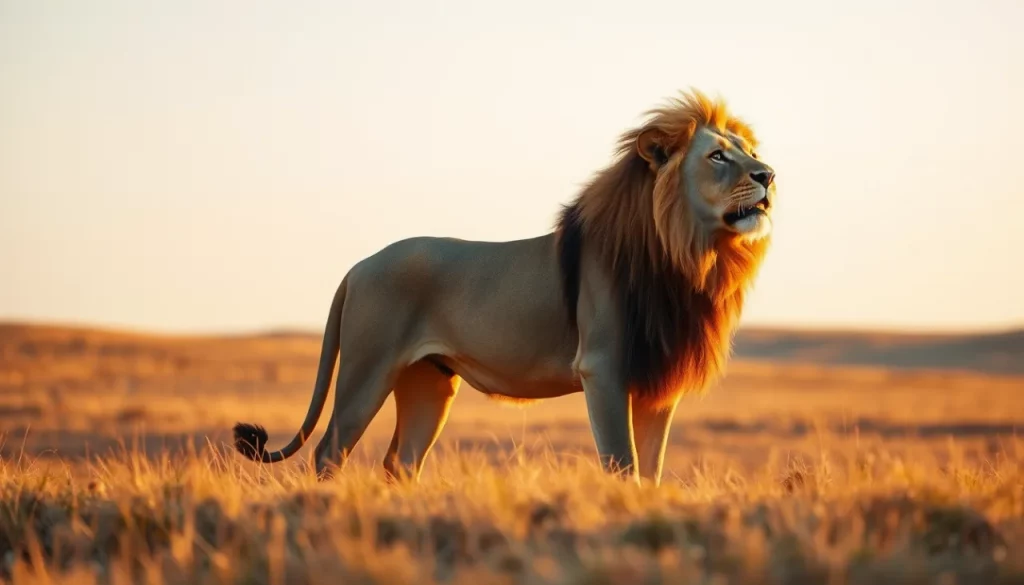
The lion is the animal symbol tied most closely to courage. Its size, its roar and its place at the top of the food chain have made it a royal emblem for centuries. Three lions appear on England’s royal arms, and the Lion of Judah is a symbol in Jewish and Christian tradition. A lion fits confidence that shows up as bravery under pressure.
The peacock represents confidence that is visible and unashamed. When a male peacock spreads his tail, he puts all of himself on display. The peacock is also India’s national bird, where it is admired for beauty and grace. Because “proud as a peacock” can also mean vain, the peacock works best when you want to suggest healthy self-love rather than quiet strength.
Nature and Spiritual Symbols for Self-Confidence
The lotus flower symbolizes confidence earned through difficulty. In Hindu and Buddhist art, the lotus rises from muddy water and opens clean, which makes it a picture of growth that hardship does not stop. Deities and the Buddha are often shown seated on or holding a lotus, so the flower carries sacred meaning for many people.

The sun and solar plexus motifs stand for personal power. In yogic and Hindu tradition, the solar plexus chakra, called Manipura, sits above the navel. It is linked to willpower and self-esteem and is usually shown in yellow. A simple sun design can express the same idea of warmth and energy coming from the inside.
The crown signals self-worth. It began as a mark of a ruler’s authority. In modern use it often means treating yourself as someone who deserves respect, which is why it shows up on self-love jewelry and tattoos.
Which Color Symbolizes Confidence?
Red and yellow are the colors most often linked with confidence, but they suggest different kinds:

- Red. Red is tied to vitality, blood and the heart. It suits bold, energetic confidence, the kind that wants to be noticed.
- Yellow. Yellow is connected to courage and happiness. In Japan it has carried associations with courage and nobility, and it is the color of the solar plexus chakra.
- Gold. Gold pairs naturally with the crown and the sun. It suggests value and self-worth.
Color meanings change from culture to culture. If a design is meant for a specific audience or community, check what the color means there before you commit to it.
What Is the Symbol for Confidence Level in Statistics?
In statistics, the confidence level is written as 1 − α. Alpha (α) is the significance level. A confidence level is the probability that the method used to build an interval will capture the true value over repeated samples. With α = 0.05, the confidence level is 1 − 0.05 = 0.95, which is usually written as 95%. The interval itself is abbreviated CI, as in “95% CI.”
People often mix up the confidence level with the interval. The level is a percentage, such as 90%, 95% or 99%. The interval is the range of values, such as 12 to 18. If you see “α” by itself, that is the significance level, not the confidence level.
How to Choose a Confidence Symbol for a Tattoo, Jewelry or Logo
The right confidence symbol depends on the message you want to send. A few points help narrow the choice:
- Name the kind of confidence. Pick a lion for courage, a lotus for resilience, a crown for self-worth, or a sun for inner energy.
- Respect sacred meanings. The lotus, chakra symbols and religious lions hold spiritual weight for Hindus, Buddhists, Jews, Christians and others. Learn the context so you use them with care.
- Keep icons simple. For apps, slides or logos, a clear outline such as a crown, a raised fist or an upright figure reads better at small sizes than a detailed animal.
- Check usage rights. Free icon and stock sites each have their own license terms. Before using a graphic commercially, confirm that its license allows it.
- Consider combining symbols. Pairing a symbol with a color, such as a gold crown or a red lion, can sharpen the meaning.
FAQ
– What is a metaphor for confidence?
“Standing tall” is a common metaphor for confidence, along with “having a backbone” and “being rock-solid.” Each one compares self-assurance to a strong, upright physical form. Animal comparisons such as “brave as a lion” do the same work.
– What are 5 examples of symbols?
Five familiar examples are the heart for love, the dove for peace, the lion for courage, the lotus for resilience and the crown for authority. A symbol is any image that stands for an idea larger than itself.
– Is there an emoji for confidence?
No emoji is officially named “confidence,” but the flexed biceps (💪) and the smiling face with sunglasses (😎) are used for it. The crown (👑) and the lion face (🦁) also carry the idea in casual messages.
– Is the raised fist a confidence symbol?
Yes, the raised fist is used as graphic shorthand for empowerment and self-belief. It also has a long history as a sign of solidarity and protest. Keep that political meaning in mind when you choose it for a logo or design.